
THANK YOU FOR SUBSCRIBING

Pharma Tech Outlook Weekly Brief
Be first to read the latest tech news, Industry Leader's Insights, and CIO interviews of medium and large enterprises exclusively from Pharma Tech Outlook


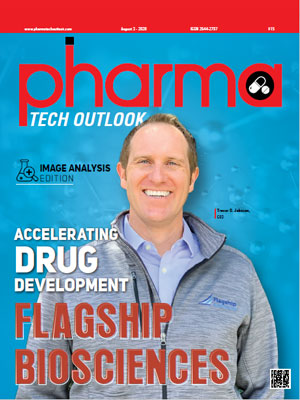
 Trevor D. Johnson, CEO
To bring simplicity to this complicated process, Flagship Biosciences offers advanced tissue image analysis solutions that give clients a clear advantage in the drug development process. As a technology-driven, tissue analysis services company, Flagship Biosciences acts as the scientific bridge between therapeutic development and real world results to accelerate the process of drug development and make it more precise. The company achieves this with the help of its proprietary analysis platform that can improve any tissue-based measurement.
Flagship Biosciences' analysis platform can also be used for both existing and novel diagnostic testing, using highly precise and accurate measurements, to deliver more detailed results. The company collects an abundance of data under the supervision of pathologists while adhering to College of American Pathologists (CAP) and Clinical Laboratory Improvement Amendments of 1988 (CLIA) standards, to produce better diagnostic results for patients.
High Tech Testing for Patient-Centric Results
Flagship Biosciences' identity runs deeper than its solutions, with a very hands-on, end-to-end approach to working with their clients. "We are more than just a technology company. We are a services company - a combination of technology, an expert multi-disciplinary team of pathologists, biologists, analysts, software engineers, and technicians who are committed to helping create life-saving drugs," says Trevor D. Johnson, CEO of Flagship Biosciences.
In drug development, one of the primary challenges faced by developers is in identifying how a particular drug works in a clinical setting. For example, if a drug is in an early phase clinical trial, the company wants to show evidence that the mechanism of actions is yielding relevant results. Flagship Biosciences' technology takes tissue context, in digital form, to measure how different cell types—particularly immune cells and tumor cells—interact and change on a patient by patient basis. "Flagship Biosciences can show real world evidence that demonstrates an effect, the way and where you'd want to see it," says Johnson. To elucidate, if a company is developing a drug to boost the immune system for an oncology application, Flagship Biosciences can show that the drug is increasing the number of macrophages within the tumor nests that are being targeted.
Secondly, Flagship Biosciences helps narrow down patients who are most suited to respond to a particular therapeutic. The company can build a diagnostic level test and conduct patient selection to identify patients with the right pathology profile, such as the right type of immune activity within the tumor microenvironment. This would lead to the best chance that the drug will have the desired effect on that patient. Flagship Biosciences works with their clients to outline how a drug works and finds the patients who would receive the most benefit from the drug. The test can be utilized throughout the clinical trial as well as performed as a clinical diagnostic.
We are more than just a technology company. We are a services company that utilizes our technology, expert team, and over 10 years experience on every sample
Flagship Biosciences offers an end-to-end tissue analysis service, starting with specimen collection, slide prep, in situ assay, scanning, and image capture, all the way to tissue image analysis, pathologist review, tissue data analytics, and custom reporting. This proprietary technology delivers high-quality tissue data, using exclusive analysis processes (cell-based data vs. traditional pixel data). As a result, the company can offer more accurate, tissue-based solutions to help identify and quantify biomarkers, giving clients the ability to apply Flagship Biosciences' technology to their tissue samples and meet project goals more effectively.
Market Leading, Hands-on Approach
Flagship Biosciences' object (cells in this case)-based image analysis (OBIA) technology is a cut above the more primitive pixel-based image analysis technology, where image pixels are not true geographical objects, and the pixel topology is limited. Pixel-based image analysis largely neglects the spatial photo-interpretive elements such as texture, context, and shape. The increased variability implicit within high spatial resolution imagery confuses traditional pixel-based classifiers, resulting in lower classification accuracies. In contrast, OBIA works on objects (homogeneous) produced by image segmentation, and more elements can be used in the classification. As an object is a group of pixels, object characteristics such as mean value, standard deviation, and ratio can be calculated. Additionally, there are shape and texture features of the objects, which can be used to differentiate classes with similar spectral information. This additional information gives OBIA the potential to produce results with higher accuracies than those produced by the traditional pixel-based method.
Using OBIA, Flagship Biosciences can take millions of intricate cellular measurements and use the resulting data for each sample, apply a machine learning process to it, and identify, for example, which cells are tumor cells, stromal cells, or immune cells. This helps ensure that the client will have access to one of the most accurate tumor and immune cell identification capabilities in the world.
"We always use the highest level of review, which is by the pathologist, for every data report"
Flagship Biosciences can also analyze samples received from all over the world. With just a digital image version of the sample sent to them, the company can run its analysis remotely and send back results. In this process, the sample is analyzed, reviewed by the pathologist, and the resulting data is reported. Here, the sample could be the part of a prospective clinical trial where individual patient data is used to make an enrollment decision. However, in other instances, Flagship Biosciences can perform clinical diagnostic testing utilizing their CAP/CLIA capability to provide higher-level insights into existing diagnostic biomarkers all through the use of a digital image.
For a novel solution, Flagship Biosciences' team of expert analysts will collect image analysis data from a representative set of samples, then use machine learning algorithms to obtain the optimal results. Again, this is done in concert with the pathologist to make sure that everything is as accurate as possible. After this phase, Flagship Biosciences can run the solution across the entire cohort, whether the patients come in one at a time or, or as a batch, and deliver the resulting data. A custom analysis is very straightforward for the company, because the software they have built is very sophisticated. It allows Flagship Biosciences to be robust and flexible, which helps them build completely novel solutions with ease.
Innovative Solutions for a Diverse Future
The company's capacity for building client-specific solutions is vast. Currently, Flagship Biosciences is working with a major pharma company, developing a novel oncology therapeutic, to run an image analysis based test to ID which patients would best respond. The need for image analysis arose from the challenge for a pathologist to accurately read and interpret a test due to the variability of the assay. They asked Flagship Biosciences to build an image analysis solution specifically to find patients that would respond to this drug. The company was able to find the right patients for their drug and help drive a strong response, with development now going into phase three.
Flagship Biosciences also has a full CAP/CLIA lab with expert MD pathologists on staff who are launching a clinical diagnostic capability. "We can apply the technology that we use in the clinical trials world to clinical diagnostics as well," states Johnson. The company is continually improving and adapting their technology to the applications that are needed in the pharma space. In addition to that, Flagship Biosciences is building out its clinical diagnostic capability. The company's long-term goal is to be the world leader in digital tissue diagnostics. "We want to have a digital analytical version of almost every manual pathology biomarker test to give a more accurate, precise, and informative result. To maintain the highest level of precision, we will ensure that a pathology team supervises all results to give patients the best testing possible," concludes Johnson.
Company
Flagship Biosciences
Management
Trevor D. Johnson, CEO
Description
Flagship Biosciences is a technology-driven tissue analysis services company that offers sophisticated tissue image analysis solutions that give clients a distinct advantage in the drug development process